India – Varanasi
Well after the tranquility of Rishikesh, I headed back to Indian chaos, this time in Varanasi. Like much of India, I found Varanasi to be full of contrasts. It it the holiest city in for Hindus, and once again on the banks of the Ganga (the Ganges).
The main feature is the bathing and 2 burning ghats which stretch for over a kilometre on the bank of the Ganga. Like elsewhere in tourist areas, the touts are uncompromising, offering boatrides, massages, shaving, flower and candle offering to float in the Ganga as well as the usual postcards etc. Once again the cows take priority over human traffic.
Once I settled in, I was able to look beyond these challenges which have become part of everyday life here. I was also able to find some peaceful moments – a chilly dawn sunrise boat ride, although as it is winter here, there was no sun to be seen, but plenty of atmospheric mist rose up from the water. I also managed some quite time by the river, watching the children fly their kites, playing cricket and the glow of the candles floating down the river after sunset.
One of the most interesting and confronting aspects of Varanasi is the burning ghats. The deceased bodies are brought to the ganges for burning, some travelling by train from miles away for their final rights. I actually found the whole experience quite serene and comforting. I’m really glad that I got to witness this different way of treating the deceased. Out of respect I didn’t take any photos of the the burning ghat (apart from the distance of the dawn boat ride), so I thought I’d share with you what I saw….
Walking towards the main burning ghat, I see the smoke rising before I get close. I walk past vast piles of wood of different thickness. Large old metal scales are waiting, like they have been for so many years before, to carefully calculate the correct amount of wood required to burn the body. I walk up the side of the ghat, past more piles of wood, more than five times my height, and from a balcony, look down at the scene below. There are about 8 fires burning, some just starting, others raging, and some just smouldering. There are men – all men, family and friends, watching or helping with the proceedings. There is a sudden loud chanting – more like football team supporters than a religious chant, and from below the balcony, I see four men carry a body wrapped in glittering gold and red cloth, while others follow after. They navigate past the crowd, past the dogs and cows, and make their way down to the edge of the Ganges. Wading into the murky water, they fully immerse the the body in the river. The body is then placed in a queue on the ground, waiting for the next available fire. The pyre is prepared by one of the lowest casts in India, and they prepare the wood for the body. Four family members then place the body on the wood pile. Some of the bodies are just covered in plastic, and I saw red blood through the plastic. The final pieces of wood were then placed over the body. One of the family members is chosen to light the fire. They stand out because their heads are shaven and they are wearing a simple white cloth. They hold stiff reeds in their hands, and hot coals from a eternal fire is placed on the reeds. They then circle the body, and when the reeds catch alight, they place the burning reeds underneath the prepared pyre.
The pyres normally burn for about three hours, after which most of the body has turned to ash, although some parts such as the chest do not burn completely. The man with the shaved head removes this part from the fire, and balancing it with two sticks, carries the remains and places it into the Ganges. When all is done, the ash is collected and removed and more workers sift though the ash in the river, similar to panning for gold. And in a way, this is what they are doing – sifting through the remains for anything that may be of value.
Up to 250 bodies can be cremated in one day at the larges ghat, and the fires after burn 24 hours a day.
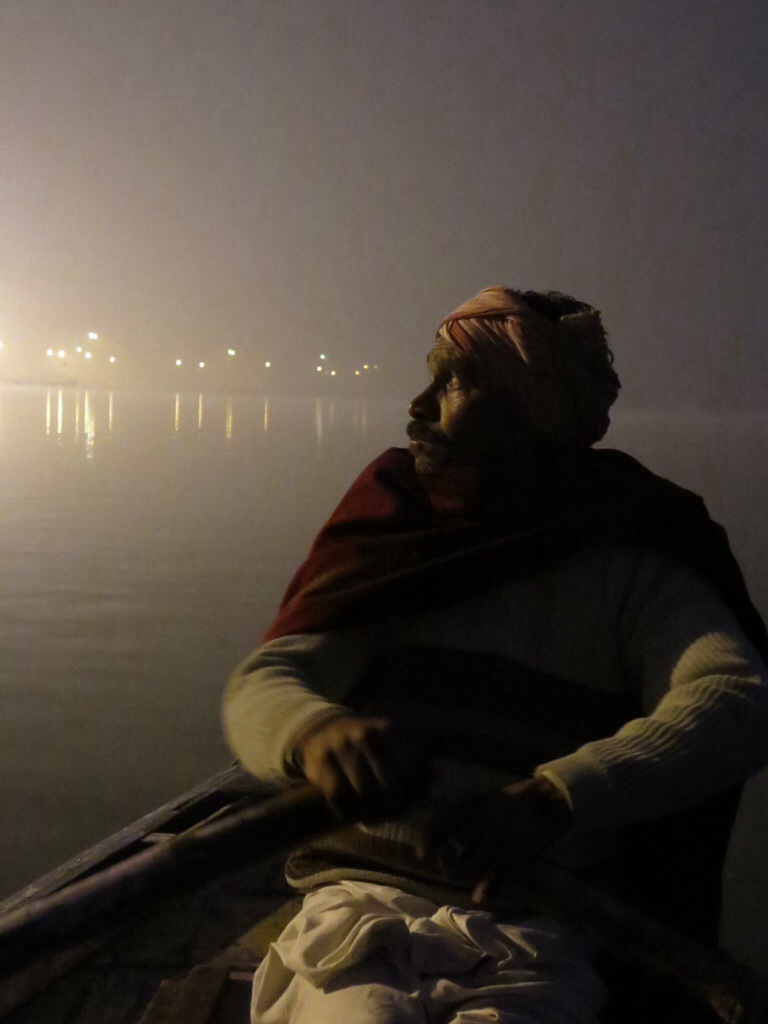
The start of the pre-dawn boat ride on the Ganges. It was a very small and old wooden boat.

The burning ghat

Riverside view

Daily rituals

Morning bustle at one of the main ghats
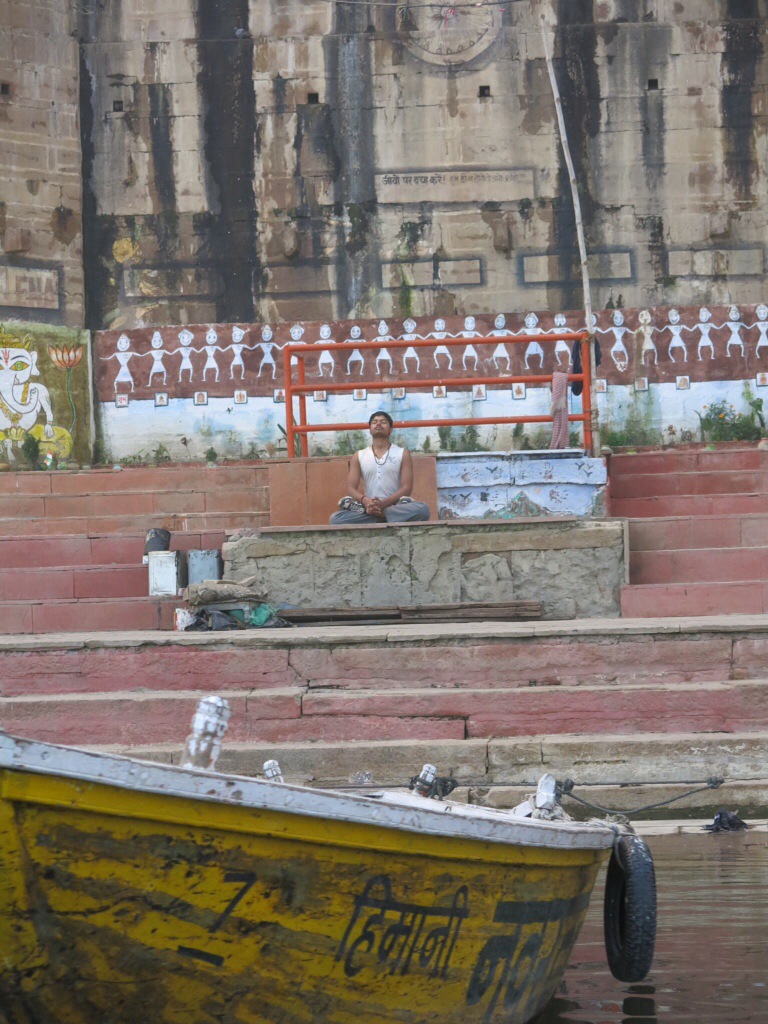
Time for some reflection

Washing in the litter strewn river

Morning bathing. It was very cold this time of year, and yet people still bathed every morning in the dirty water
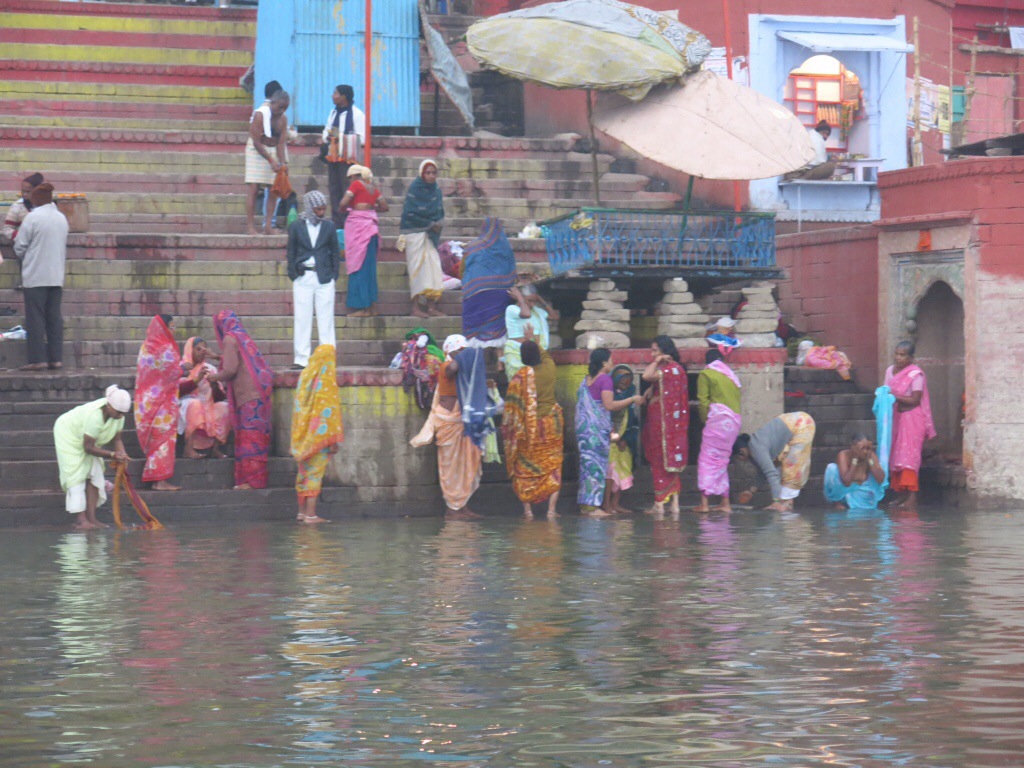
Women bathing
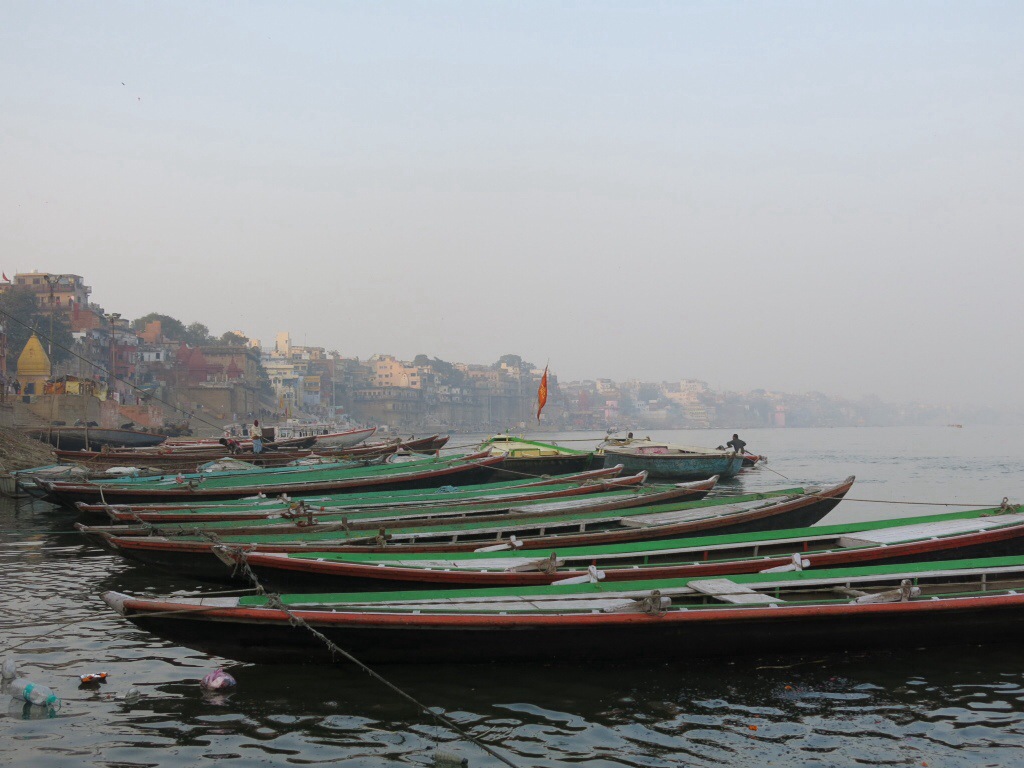
River scene
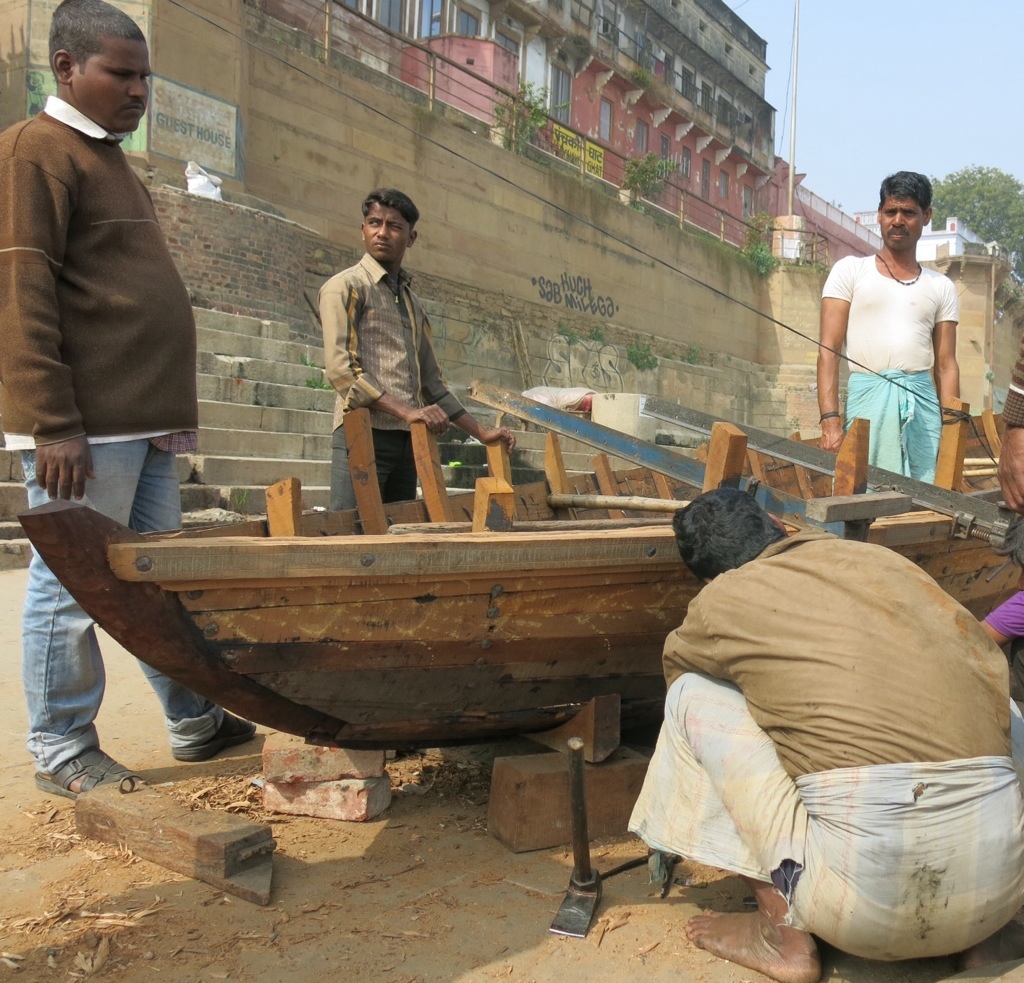
Boat building
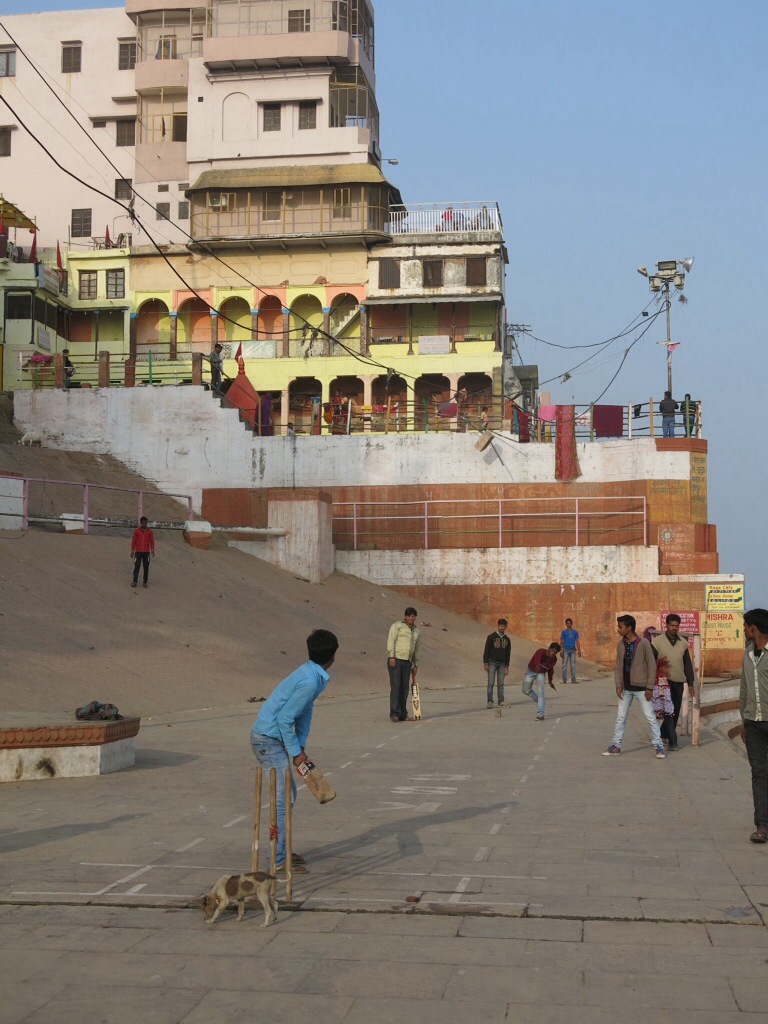
Cricket on the banks of the Ganges
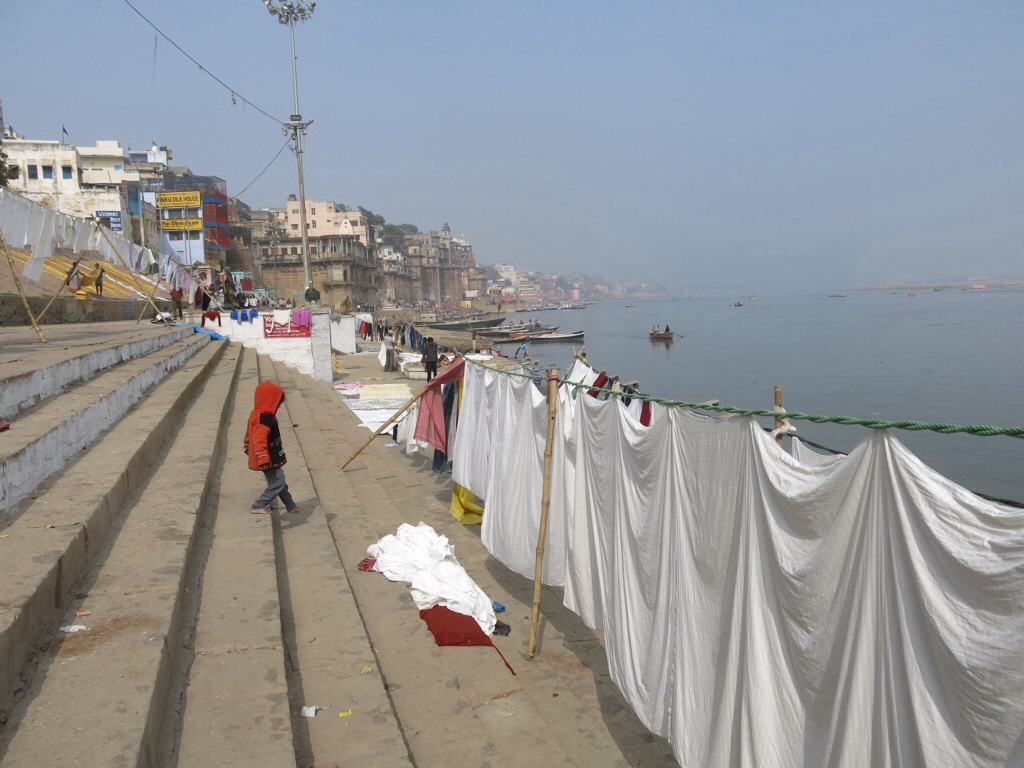
River scene

Chai time
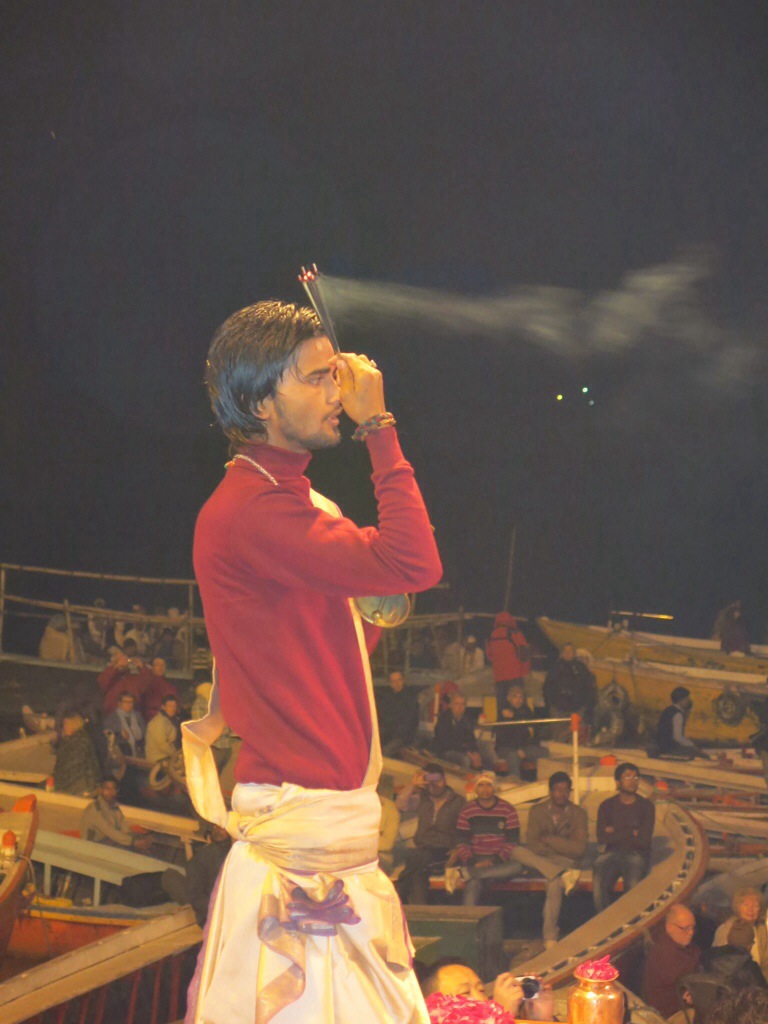
Riverside ceremony


 Tales from the Trail
Looks ASIC you are really enjoying a different social scene and culture.. A lot of good memories. Keep well love u,mum